Battery Energy Storage Systems (BESS) are transforming how telecom operators power their infrastructure across Pakistan. With diesel costs exceeding PKR 300/liter and grid reliability remaining unpredictable, BESS offers a proven path to reduce operating costs by 70-80% while improving network uptime.
This guide covers everything you need to know about implementing BESS at telecom sites—from technical fundamentals to ROI calculations, real case studies from Pakistani deployments, and step-by-step implementation guidance.

What Is BESS for Telecom?
Battery Energy Storage Systems (BESS) are advanced power backup solutions that store electrical energy in rechargeable battery banks. Unlike traditional diesel generators that create power through combustion, BESS systems function as intelligent energy buffers—charging when grid power is available and automatically switching to battery power during outages.
In Pakistani telecom operations, BESS typically consists of lithium iron phosphate (LFP) or lithium-ion battery banks ranging from 10 kWh to 100+ kWh capacity, integrated with existing site power infrastructure including rectifiers, inverters, and diesel generators.
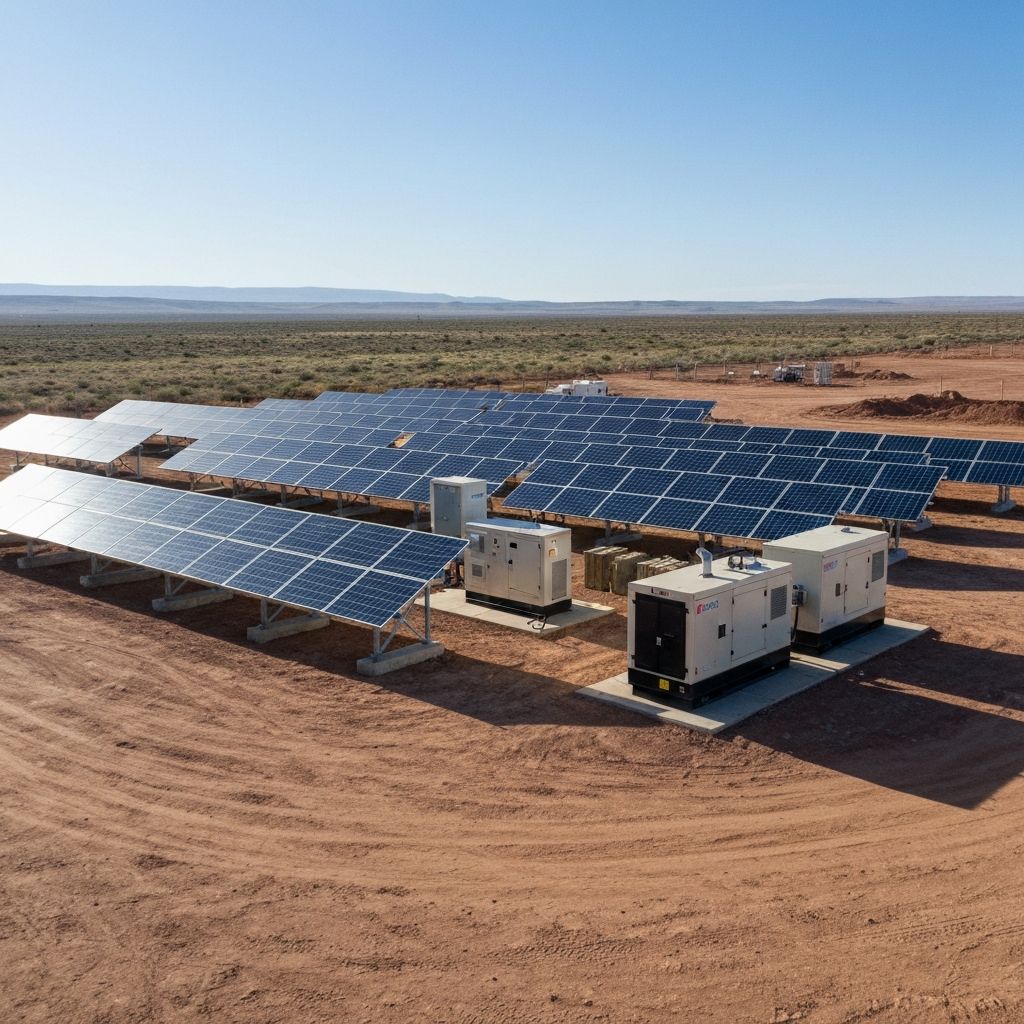
Modern BESS deployments often incorporate solar panels in hybrid configurations, enabling sites to operate with minimal or zero diesel consumption. The technology addresses Pakistan's specific challenges: frequent grid outages (8-12 hours daily in many regions), high diesel costs, difficult fuel logistics to remote tower sites, and increasing pressure to reduce carbon emissions.
Key Concepts & Terminology
Before diving into implementation, understanding the technical terminology is essential for making informed decisions about BESS system design and performance.
Battery Capacity (kWh)
The total amount of energy a battery can store, measured in kilowatt-hours. A 30 kWh battery can theoretically deliver 3 kW of power for 10 hours, or 6 kW for 5 hours. Actual usable capacity depends on the depth of discharge limits set by the manufacturer.
Depth of Discharge (DoD)
The percentage of battery capacity that can be safely used without damaging the battery. Modern LFP batteries allow 80-90% DoD, while traditional lead-acid batteries should not exceed 50% DoD. Higher DoD means more usable capacity from the same battery size.
Cycle Life
The number of complete charge-discharge cycles a battery can perform before capacity degrades to 80% of original. Quality LFP batteries achieve 3,000-6,000 cycles, translating to 8-15 years in typical telecom applications with daily cycling.
Battery Management System (BMS)
The electronic brain of the BESS that monitors cell voltages, temperatures, and current flow, ensuring safe operation and maximizing battery lifespan. A quality BMS prevents overcharging, over-discharging, and thermal runaway while providing remote monitoring capabilities.
The transition to BESS is not just about cost savings—it's about building resilient telecom infrastructure that can support Pakistan's digital future. Operators who invest in energy storage today are positioning themselves for sustainable growth.
How BESS Works for Telecom Towers
A telecom BESS deployment integrates seamlessly with existing site infrastructure through a carefully orchestrated power management sequence. Understanding this operational flow is crucial for successful implementation.
Step 1: Normal Grid Operation
When grid power is available, the site's existing rectifier converts AC to DC power, simultaneously running the telecom equipment and charging the BESS. Modern lithium batteries accept high charge rates (0.5C to 1C), allowing rapid recharging during short grid windows—a 30 kWh battery can fully charge in 1-2 hours.
Step 2: Grid Outage Detection
Within milliseconds of grid failure, the BESS automatically begins discharging to maintain continuous power to critical loads. This transition is seamless—no switching delay, no voltage sag, no equipment reset. The BMS monitors voltage and current in real-time, adjusting discharge rates to match site load requirements.
Step 3: Generator Coordination
In hybrid BESS-generator configurations, the system determines when to start the diesel generator based on battery state of charge. Instead of starting immediately upon grid failure, the generator only activates when batteries reach a preset threshold—typically 30-40% remaining capacity.
This approach reduces generator runtime by 60-80% compared to conventional operation. When the generator does run, it operates at optimal load (60-80% capacity) for maximum fuel efficiency.

Step 4: Solar Integration
Sites with solar panels enjoy even greater diesel savings. During daylight hours, solar panels feed DC power directly to site loads while simultaneously charging the BESS. In Pakistan's high-insolation regions (5-6.5 kWh/m²/day), properly sized solar-BESS systems can eliminate diesel consumption entirely.
Benefits & Advantages
The business case for BESS in Pakistani telecom operations extends far beyond simple fuel savings. Here are the comprehensive benefits that make BESS a strategic investment.
Dramatic Cost Reduction
The most immediate benefit is diesel cost reduction. A typical urban tower consuming 2-3 kW with 6-8 hours daily grid outages spends PKR 150,000-250,000 monthly on diesel. After BESS installation, diesel costs drop to PKR 30,000-50,000 monthly—savings of PKR 1.2-2.4 million annually per site.
Typical Monthly Cost Comparison (Per Site)
We deployed BESS across 47 rural sites in Punjab. First-year diesel savings exceeded 72%, with full system payback achieved in 3.2 years. The reliability improvement was equally impressive—network uptime increased from 97.8% to 99.6%.
Improved Network Reliability
BESS eliminates the single biggest cause of rural site downtime: generator failure and fuel logistics problems. Diesel generators require regular refueling every 3-7 days, creating vulnerability to fuel supply disruptions, theft, and access issues. BESS systems operate autonomously for weeks when combined with solar.
Reduced Maintenance Burden
Traditional diesel-dependent sites require frequent visits for refueling, servicing, and repairs. BESS dramatically reduces this burden. Modern lithium batteries are virtually maintenance-free—no water topping, no terminal cleaning, no equalization charging. The BMS provides remote monitoring, enabling predictive maintenance.
- Site visit frequency reduced from 30/month to 2-3/month
- No oil changes, filter replacements, or belt adjustments
- Remote diagnostics eliminate unnecessary truck rolls
- Predictive alerts prevent surprise failures
Real-World Case Studies
Pakistani telecom operators have deployed thousands of BESS systems over the past 3-4 years. Here are detailed case studies showcasing different deployment scenarios and outcomes.
Case Study 1: Rural Punjab Tower - Solar-BESS Hybrid
Challenge
Remote tower 35km from nearest city with only 6-8 hours grid availability. Daily diesel refueling was expensive and logistically difficult, consuming 180 liters monthly.
Solution
Deployed 40 kWh LFP battery system with 8 kW solar array, retaining existing generator as backup only.
Outcome
Diesel consumption dropped by 92% to just 15 liters monthly. Site visit frequency reduced from 30 to 2 per month. Network uptime improved from 96.5% to 99.8%.
Case Study 2: Urban Karachi Site - Battery Only
Challenge
Rooftop site in central Karachi with 18-20 hours grid availability but space constraints preventing solar installation. Noise complaints from generator operation.
Solution
Installed 25 kWh LFP battery system (battery-only, no solar) to handle 4-6 hour daily outages.
Outcome
Completely eliminated diesel consumption. Resolved tenant noise complaints. Freed rooftop space previously occupied by generator and fuel tank.
Case Study 3: Industrial Faisalabad - High-Load Application
Challenge
Manufacturing facility with dedicated telecom infrastructure requiring 12 kW continuous power (significantly higher than typical towers). Grid availability only 14-16 hours daily.
Solution
Deployed 100 kWh LFP battery system with 20 kW solar array and 30 kVA backup generator.
Outcome
83% diesel reduction from 480L to 80L monthly. System also powers facility security and emergency lighting. Survived 3-day complete grid outage event.
BESS Sizing Guide
Accurate system sizing is critical for both economics and performance. Undersized systems fail to deliver expected savings; oversized systems waste capital. Here's a practical methodology for Pakistani conditions.
Battery Capacity Calculation
Calculate required battery capacity using this formula:
Battery Capacity (kWh) = (Average Load × Target Backup Hours) ÷ Usable DoD
Example: (3 kW × 6 hours) ÷ 0.8 = 22.5 kWh minimum
Add 25% margin: 22.5 × 1.25 = 28 kWh recommended
Recommended Configurations by Site Type
| Site Type | Load Range | Recommended Battery | Solar (Optional) | Expected Savings |
|---|---|---|---|---|
| Small Rural Tower | 1.5 - 2 kW | 20 - 25 kWh | 5 kW | 80 - 90% |
| Standard Tower | 2.5 - 3.5 kW | 30 - 40 kWh | 8 kW | 70 - 85% |
| High-Load Tower | 4 - 6 kW | 50 - 70 kWh | 12 kW | 65 - 80% |
| Data Center/Hub | 8 - 15 kW | 100+ kWh | 20+ kW | 60 - 75% |
Investment & ROI Analysis
Understanding the full investment picture is essential for business case development. Here's what Pakistani operators typically invest for different BESS configurations.
Typical BESS Investment Ranges (2024-2025)
These investment ranges include battery banks, inverters/charge controllers, mounting structures, installation labor, system integration, and commissioning. Solar panel costs add approximately PKR 1-1.2 lakh per kW installed.
ROI Timeline
Based on current diesel prices (PKR 280-320/liter) and grid conditions across different regions:
- Rural sites with 10-12 hour outages: 2.5 - 3.5 year payback
- Semi-urban sites with 6-8 hour outages: 3.5 - 4.5 year payback
- Urban sites with 4-6 hour outages: 4 - 5.5 year payback
- Sites with solar integration achieve 20-30% faster payback

Common Mistakes to Avoid
Learning from others' experiences can save significant time and money. Here are the most common pitfalls in Pakistani BESS deployments and how to avoid them.
Mistake 1: Undersizing the Battery System
Many operators try to minimize CAPEX by specifying minimum battery capacity. This results in higher-than-expected diesel consumption as the system cannot fully cover extended outages. Always include 20-30% capacity margin and use conservative (worst-case) grid availability assumptions in sizing calculations.
Mistake 2: Ignoring Thermal Management
Pakistan's extreme summer temperatures (45-50°C in many regions) require proper thermal management. Skipping this to save costs leads to accelerated battery degradation and shortened system life. Insulated enclosures with adequate ventilation are mandatory, not optional.
Mistake 3: Choosing Lowest-Cost Batteries
Battery quality varies enormously. Tier-2 and Tier-3 suppliers may offer 30-40% lower prices but typically deliver significantly shorter cycle life and higher failure rates. Over a 10-year horizon, premium batteries from CATL, BYD, or EVE are more economical than cheap alternatives that require early replacement.
Mistake 4: Neglecting Training
BESS technology differs fundamentally from diesel generators. O&M teams familiar only with traditional power systems make mistakes that damage batteries or reduce efficiency. Comprehensive training for field staff is essential before deployment.
The biggest mistake we see is treating BESS like a drop-in generator replacement. It's a different technology requiring different operational practices. Sites where O&M teams received proper training consistently outperform those where training was skipped.
Frequently Asked Questions
Key Takeaways
- BESS delivers 70-80% diesel cost reduction with 3-5 year payback in Pakistani conditions
- Solar-BESS hybrid configurations maximize savings for sites with adequate space and insolation
- Quality matters: Tier-1 batteries (CATL, BYD, EVE) deliver significantly better long-term value
- Proper thermal management is mandatory for Pakistani climate conditions
- Remote monitoring capabilities reduce site visits and enable predictive maintenance
- Retain diesel generator as emergency backup for maximum reliability
Conclusion
Battery Energy Storage Systems represent one of the most impactful investments available to Pakistani telecom operators today. With proven technology, compelling economics, and alignment with both operational and sustainability goals, BESS deployment should be a strategic priority for any operator serious about reducing costs and improving network reliability.
The key to success lies in proper planning—accurate site assessment, appropriate system sizing, quality component selection, and thorough O&M training. Operators who approach BESS systematically consistently achieve or exceed their business case targets.
As diesel prices continue rising and battery costs decline, the economic case for BESS will only strengthen. The question is not whether to deploy BESS, but how quickly you can roll it out across your network.
Engr. Ahmed Hassan
Senior Energy Solutions Architect
With over 15 years of experience in telecom power systems, Engr. Ahmed Hassan has led BESS deployments across 500+ sites in Pakistan. He specializes in hybrid power system design and has consulted for major telecom operators on energy optimization strategies.