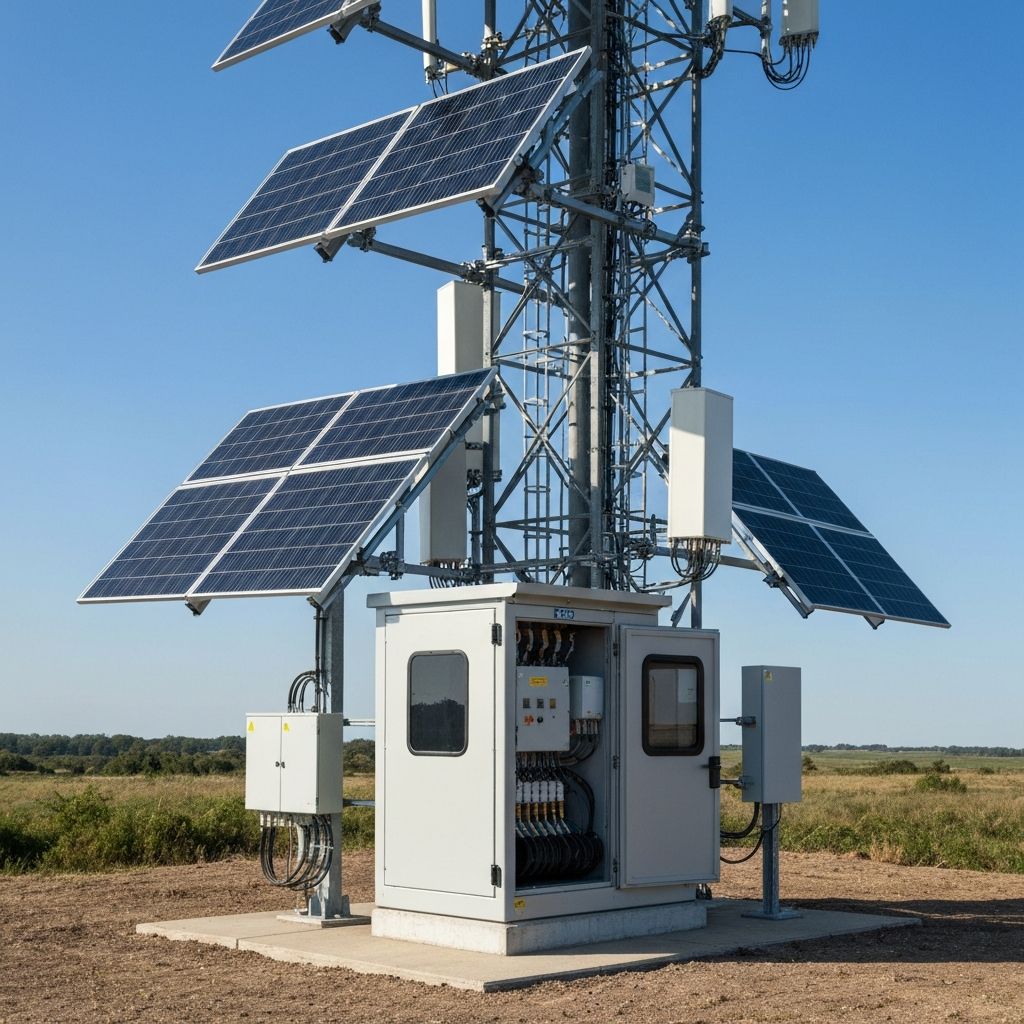
Hybrid power systems combining solar, batteries, and diesel generators are delivering compelling returns for Pakistani telecom operators and industrial facilities. But how do you calculate ROI accurately? What factors most impact payback periods?
This guide provides a financial analysis framework with real numbers from Pakistani deployments, helping you build a credible business case for hybrid power investment.

Understanding Hybrid Power Systems
A hybrid power system integrates multiple energy sources—typically solar panels, battery storage, and a diesel generator—managed by an intelligent controller that optimizes energy flow to minimize costs while maintaining reliability.
The fundamental economics are straightforward: solar provides the cheapest energy when available, batteries store excess solar and provide backup during short outages, and the diesel generator serves as a last-resort backup for extended grid failures or periods of low solar production.
Component Roles
| Component | Primary Role | Cost Profile | Typical Sizing |
|---|---|---|---|
| Solar Panels | Primary energy source (daytime) | High CAPEX, zero OPEX | 1.5-2x average load |
| Battery Storage | Energy buffer, short backup | High CAPEX, low OPEX | 4-8 hours backup |
| Diesel Generator | Extended backup only | Low CAPEX, high OPEX | 100% load capacity |
| Hybrid Controller | System optimization | Moderate CAPEX | Site-specific |
ROI Calculation Framework
Accurate ROI calculation requires understanding both the costs (capital investment and ongoing operations) and the savings (reduced diesel consumption, lower maintenance, avoided grid costs).
Capital Investment Components
Typical Hybrid System Investment (3 kW Site)
Monthly Savings Calculation
For a typical telecom site with 3 kW average load and 8 hours daily grid outage:
Before Hybrid System (Diesel Only)
Daily diesel runtime: 8 hours
Generator fuel consumption: 1.5 L/hour
Monthly diesel: 8 × 1.5 × 30 = 360 liters
Diesel cost @ PKR 300/L: PKR 108,000/month
After Hybrid System
Solar covers: ~70% of energy needs
Battery handles: Short outages (4-6 hours)
Generator runtime: ~2 hours/day (extended outages only)
Monthly diesel: 2 × 1.5 × 30 = 90 liters
Diesel cost @ PKR 300/L: PKR 27,000/month
Monthly Savings: PKR 81,000
Annual Savings: PKR 972,000 (~10 Lakh)
Payback Period Calculation
Simple payback = Total Investment ÷ Annual Savings
Using our example: PKR 38 Lakh ÷ PKR 10 Lakh/year = 3.8 years
This simple calculation doesn't account for additional benefits like reduced maintenance costs, improved reliability, and potential revenue from avoided network downtime—all of which improve the true ROI.
Real ROI Case Studies
Telecom Tower - Rural Sindh
Challenge
Remote site with only 4-6 hours grid power daily. Consuming 400 liters diesel monthly at PKR 120,000. Frequent generator failures causing network outages.
Solution
Installed 10 kW solar + 40 kWh battery system. Total investment PKR 45 Lakh including site preparation and installation.
Outcome
Diesel consumption reduced to 50 liters monthly (PKR 15,000). Network uptime improved from 96% to 99.7%. Payback achieved in 3.3 years.
Industrial Facility - Faisalabad
Challenge
Textile manufacturing facility with 50 kW load, experiencing 6-8 hours daily outages. Monthly diesel cost PKR 8 Lakh. Production losses during power transitions.
Solution
Deployed 80 kW solar + 200 kWh battery + intelligent load management. Investment PKR 2.8 Crore.
Outcome
Diesel reduced by 75% to PKR 2 Lakh monthly. Seamless power transitions eliminated production losses worth PKR 50 Lakh annually. ROI including production savings: 2.1 years.
Factors Affecting ROI
Grid Availability
Sites with poor grid availability (less than 12 hours daily) see faster payback because they're displacing more diesel. Conversely, sites with 18+ hours grid availability have longer payback periods but still achieve positive ROI over system lifetime.
Solar Irradiance
Pakistan's solar resource varies from 4.5 kWh/m²/day in northern areas to 6.5 kWh/m²/day in Sindh and Balochistan. Higher irradiance means smaller solar arrays can produce the same energy, reducing capital costs and improving ROI.
Diesel Price Trends
With diesel prices trending upward over time, hybrid systems become more attractive. A 10% increase in diesel prices improves payback by approximately 8-10%.
We model hybrid investments with diesel prices increasing 5% annually. Even with conservative assumptions, every site achieves positive NPV. Sites with poor grid availability show returns exceeding 25% IRR.
Frequently Asked Questions
Key Takeaways
- Hybrid systems typically achieve 3-5 year payback in Pakistani conditions
- Sites with poor grid availability see fastest ROI
- Include all savings: diesel, maintenance, reliability, avoided downtime
- Rising diesel prices improve ROI over time
- Quality components cost more upfront but deliver better long-term returns
- Multiple financing options available given strong ROI profiles
Conclusion
The financial case for hybrid power systems in Pakistan is compelling and well-proven. With proper sizing and quality components, organizations can confidently expect 3-5 year payback followed by years of reduced operating costs. The calculation methodology in this guide provides a framework for building your own business case.
Engr. Asad Mehmood
Energy Finance Specialist
Engr. Asad Mehmood combines engineering expertise with financial analysis to help organizations make informed energy investment decisions. He has structured hybrid power investments totaling over PKR 50 Crore across telecom and industrial sectors.